
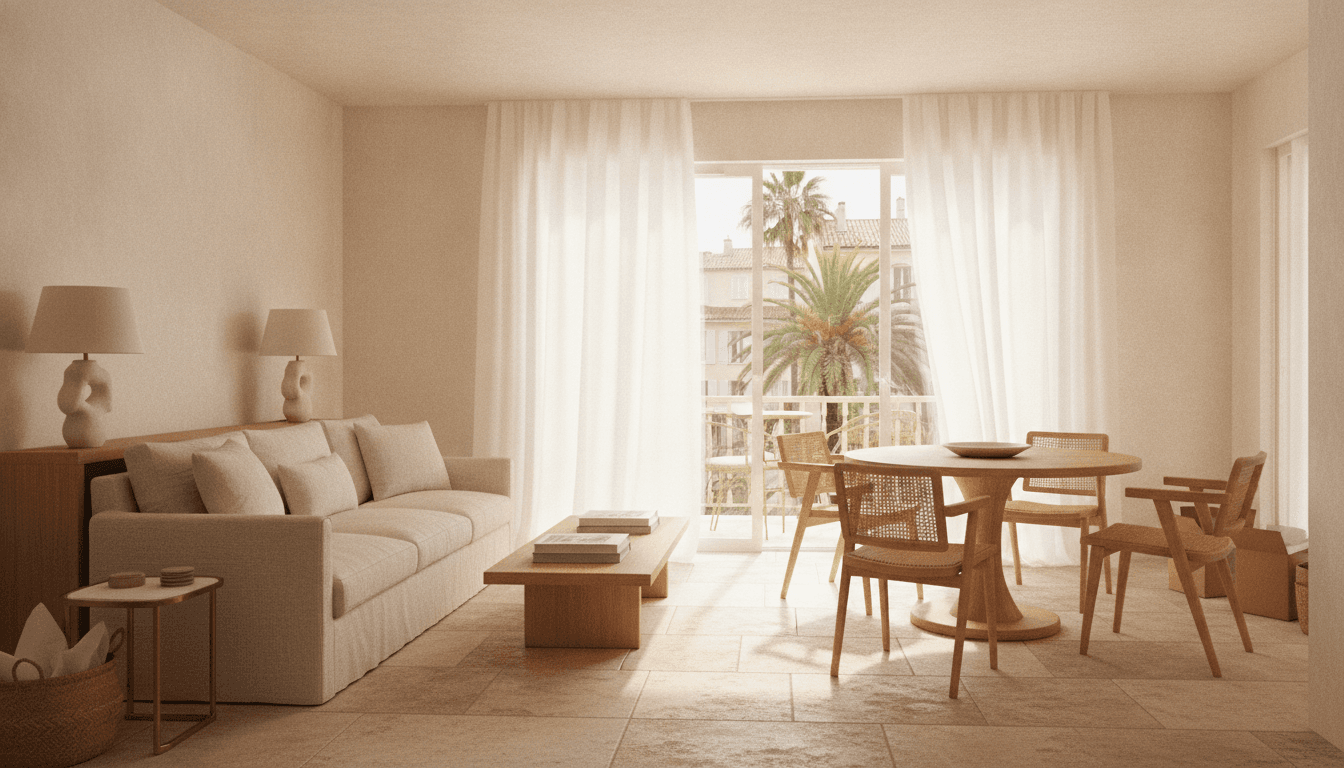
You bought the apartment, signed the papers, collected the keys. Then comes the part many owners underestimate: making the place work when you live in Italy and the property is in Menton. A few furniture orders can turn into weeks of delay if measurements are incomplete, delivery access is unclear, or the home has to be ready before your next trip.
I wanted to write this because there is a real gap between buying on the French Riviera and knowing how to furnish a second home in France from across the border. That gap is practical, not theoretical. At Marea Studio, this is the kind of work I do: interior decoration, turnkey furnishing and, when relevant, home staging, with a clear focus on furnishing rather than building work.
Start with the right brief: furnishing, not renovation
The first useful step is defining what the project actually is. Many homes in Menton do not need construction. They need a furnishing plan, better room use, storage, lighting, textiles, and a clear setup for everyday life or short stays.
That distinction matters. People often group decoration, renovation and architecture together, but they are not the same service. I do not handle building work, renovation or architectural design. My role is to shape the interior once the shell is there: decide what each room needs, select furniture and finishes, coordinate purchases, and prepare the property so it feels complete.
A simple way to begin is to separate your to-do list into three parts:
- items that can be solved with furniture and styling,
- items that depend on equipment and household setup,
- items that would require a building professional and should be treated separately.
This saves time, and it stops a furnishing project from getting stuck behind unrelated decisions.
What furnishing on the French Riviera means in real life
Homes in Menton have their own logic. The light is strong. Outdoor space matters, even when it is small. Salt air and humidity affect how materials age. Many apartments are compact, and some are used only part of the year.
So before choosing a style, I look at use. Is this a second home for family weekends. A place that has to be ready for summer stays. A furnished property that may also welcome short-let guests. Those answers change the furnishing choices more than trends do.
In this area, I often prioritise:
- easy-care finishes rather than delicate surfaces,
- washable or removable fabrics,
- furniture that can move easily in smaller rooms,
- storage that makes arrival simple,
- lighting that softens the evening after a day of bright sun.
Terraces also deserve real thought. Even a narrow outdoor space can become useful if it has the right table, chairs that cope with sea air, and a layout that leaves room to move. I would rather see one well-sized outdoor setup than too many pieces that clutter the space.
How to furnish a home in Menton from Turin, Milan or Genoa
The main challenge is not taste. It is distance.
When I work with owners based in Italy, I build the project around remote decisions from the start. That means gathering accurate information before anyone buys anything: a plan if available, full room photos, reliable dimensions, details about the building, access constraints, lift size, door widths, parking conditions for delivery teams, and the dates when the flat can realistically receive goods.
Then I put together a complete furnishing direction. Not a shopping list without context, but a room-by-room plan. Where do suitcases go. Where do beach towels dry. Is there a proper spot for a laptop. Does the dining table also need to work as a work table. Is there enough closed storage for a second-home routine.
That is what turnkey furnishing means to me. It is not about buying everything from one source. It is about coordinating the right mix so the apartment is set up and coherent at the end, instead of becoming a holding area for random deliveries.
Owners usually compare three routes: handling every purchase themselves, relying on large retailers with local delivery, or working with a local studio. Marea Studio belongs to the third option, and I should state the bias openly: my approach is best suited to owners who want one person to define the furnishing direction and coordinate the setup, without entering a renovation project.
Cross-border deliveries: what to check before placing orders
Furniture can move between Italy and France without the drama people often expect, but good logistics still need planning. One missing detail can affect a whole room.
Before ordering, I suggest checking these points carefully:
- The exact level of delivery service. Delivery to Menton does not always include carrying, assembly or room placement.
- Building access. Old streets, limited parking, upper floors and narrow staircases all matter.
- Lead times. A project is easier to manage when key items arrive in a tight window rather than in scattered waves.
- Who receives and checks goods. If you are in Milan and the delivery arrives in Menton on a weekday morning, someone local needs to handle that moment properly.
In my own work, I try to reduce avoidable risk. I would rather choose dependable pieces with clear dimensions and manageable delivery terms than something beautiful on paper but unreliable in practice.
Second home, short-let or future sale: choose the right furnishing logic
One apartment can have several futures. That is why the brief matters so much.
If the property is mainly for your own use, I can lean further into personal habits and comfort. If it needs to support short stays or possible rental use, the furnishing has to be clearer. Storage should be obvious. Textiles should be easy to maintain. The terrace should read well in photos. The layout should make sense immediately to someone arriving with no explanation.
This is also where home staging can be useful. At Marea Studio, home staging is part of what I offer when an owner wants the flat to present better for sale or rental. In a Menton apartment, that often means editing what is visible, improving flow, choosing the right scale of furniture, and making the home look calm and ready, without any building work.
What to do first this week
If you have just bought in Menton, do not start with impulse purchases. Start with a working file.
- Collect the plan, room photos and precise measurements.
- Write down how the home will be used over the year.
- List what must be ready for the first stay.
- Mark the items that need to cope with humidity, salt air and terrace life.
- Decide if you want to manage individual orders yourself or hand the furnishing over as one coordinated project.
The honest takeaway is simple. Furnishing from across the border gets easier when the project is defined early and room by room, before the first orders go in. If that is the kind of help you need, I explain my approach on the services page.