
If you search for home staging cost French Riviera, you quickly run into national averages that do not tell you much about Nice, Menton, Monaco or Roquebrune-Cap-Martin. Most owners are not looking for theory. They want to know what a realistic local budget looks like and what that budget actually includes.
I wrote this to make that clearer. I am not trying to sell a miracle return or attach a fixed outcome to every property. I want to explain the local price bands, the reasons behind them, and how to judge whether a quote fits your flat, villa apartment or short-let.
Home staging cost on the French Riviera: the local ranges to know
General French guides often acknowledge that Riviera pricing is higher, then stop there. The more useful benchmark from the research notes is this: a professional home staging service on the Riviera is commonly placed around €2,500 to €4,500. A provincial France comparison is often cited around €1,500 to €2,800. A very light owner-led approach or partial DIY setup is often placed around €200 to €1,500.
Those figures are only starting points. They become meaningful when you match them to the actual property:
- Is the home empty or already furnished?
- Do you need a simple reset, or a full furnishing list?
- Is the terrace part of the presentation?
- Is the property for sale, for a second-home refresh, or for short-term rental use?
- Do you need advice only, or sourcing and installation as well?
On the French Riviera, light does a lot of the work, but it also reveals everything. Heavy curtains, tired upholstery, furniture that is too deep for a small room, or outdoor pieces that do not suit salt air become obvious fast. That is one reason local quotes can sit above broad national guides.
Why home staging prices are often higher here
The first reason is property type. A compact seafront studio does not need the same setup as a second home closed for part of the year, or a flat prepared for weekly holiday lets.
The second reason is climate and use. Here I have to think about intense sun, humidity, salt air, narrow rooms, outdoor living and storage limits. A rug that traps heat, a terrace chair that fades too fast, or decorative pieces that look good for one photo but are awkward in daily use can create the wrong result.
The third reason is logistics. In many Riviera buildings, access is not easy. There may be no lift, limited loading space, tight delivery windows or very little time between bookings. If a property needs a turnkey setup, that practical layer matters.
Then there is the visual standard of the local market. Listings compete against bright sea-view apartments, terraces and highly edited holiday rental photos. To make a property read clearly, I often need to simplify, rebalance and define the use of each zone without filling the space with unnecessary décor. This is exactly the work I do at Marea Studio when a Riviera property needs home staging or turnkey furnishing: I review the plan room by room, cut what confuses the eye, adjust scale and circulation, and make sure the terrace reads as part of the home rather than as leftover outdoor space.
Home staging does not include building work, renovation or architectural services. It focuses on presentation through layout, furniture, styling, lighting and the way the property is prepared for photos or viewings.
What changes the quote: three common levels of service
Light staging with what is already there
This is the leanest option. I work with the furniture already in the property, remove what distracts, reposition key pieces and suggest a short shopping list. It suits lived-in homes or second homes that have enough basics but feel visually crowded or dated.
The budget here often goes into editing the space rather than replacing everything. A better bed setup, lighter curtains, a clearer dining area or a terrace that finally feels usable can make a large difference in how the home reads.
Staging with selected furnishing additions
Some homes have a decent base but still feel incomplete. In that case, the quote may include a few extra pieces such as lighting, textiles, occasional tables, outdoor seating, bed linen or wall décor that brings the rooms into one consistent story.
This level is often appropriate when the goal is to avoid the empty look without turning the property into an over-styled set.
Turnkey furnishing for an empty property
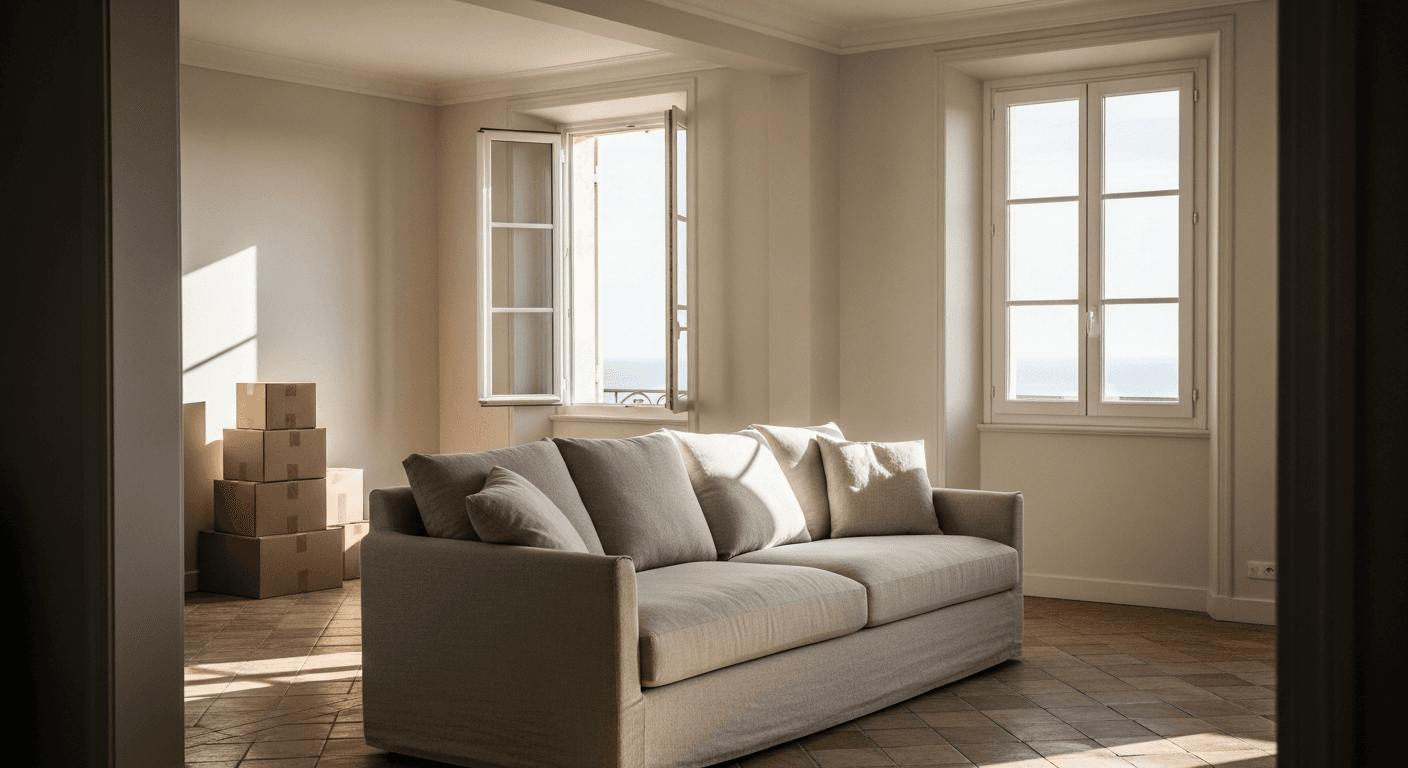
If the home is empty, the cost naturally rises. Someone has to define the full list, choose pieces that fit the footprint, place the orders, coordinate deliveries and install everything. On the Riviera, I almost always include the terrace in that thinking, because buyers and guests do.
Empty homes are hard to read in person. Furniture helps explain proportion, circulation and everyday use.
Home staging pricing in 2026: what should be included
When you compare quotes, the total matters less than the scope. A useful proposal should spell out what is actually covered.
- site visit or remote review, depending on the property;
- room-by-room recommendations;
- shopping list or sourcing plan;
- rearrangement of existing furniture;
- selection of textiles, lamps and accessories;
- ordering and coordination for turnkey packages;
- on-site installation;
- virtual home staging option if physical staging is not possible.
Virtual staging has its place. If a property is empty, occupied, or difficult to access quickly, digital images can help people understand the layout. Still, it is not the same as a real setup. If viewings are coming soon, physical staging usually gives visitors a clearer experience on site.
The 1 to 3% rule and a simple way to think about ROI
The research notes also mention a common rule of thumb: home staging is often considered within around 1 to 3% of the property price. I see this as a sense check, not a fixed formula.
Say you are considering a staging budget of €3,000. The practical question is not whether that number carries an automatic return. The real question is what that amount covers. Does it include decluttering guidance, key purchases, terrace styling, bedding, lamps, delivery and installation? Is it proportionate to the asking price and the presentation gap the property currently has?
For me, ROI should be discussed honestly. Home staging is intended to improve how a home is understood and perceived: clearer photographs, more legible rooms, fewer distractions during visits, and a more coherent atmosphere overall. That is the value to assess.
If the property already looks clear and well furnished, the budget can stay modest. If it is empty, dark in the wrong places, or visually confused, a stronger intervention may be justified.
How to set the right budget in Nice, Menton, Monaco or Roquebrune
I suggest starting with function, not style.
For a second home, think about easy maintenance, resistance to humidity and salt air, and what still feels tidy after weeks of closure. For a short-let, think about comfort that photographs well but is also durable and easy to reset. For a sale listing, think first about clarity of layout and the removal of anything that interrupts the reading of the space.
Before asking for a quote, gather four things: honest photos, a floor plan if you have one, a note of what furniture stays, and the date the property needs to be ready. That alone makes budgeting far more accurate.
My honest takeaway is simple. On the French Riviera, the real issue is rarely finding the cheapest home staging price. It is choosing the level of work that fits the property without drifting into unnecessary purchases or mixing staging with renovation work that belongs to a different service entirely.
If you want to place your project between home staging, full decoration and turnkey furnishing, I outline those options on Marea Studio's services page. It follows the same point as this article: the right brief starts with the actual use of the property.