
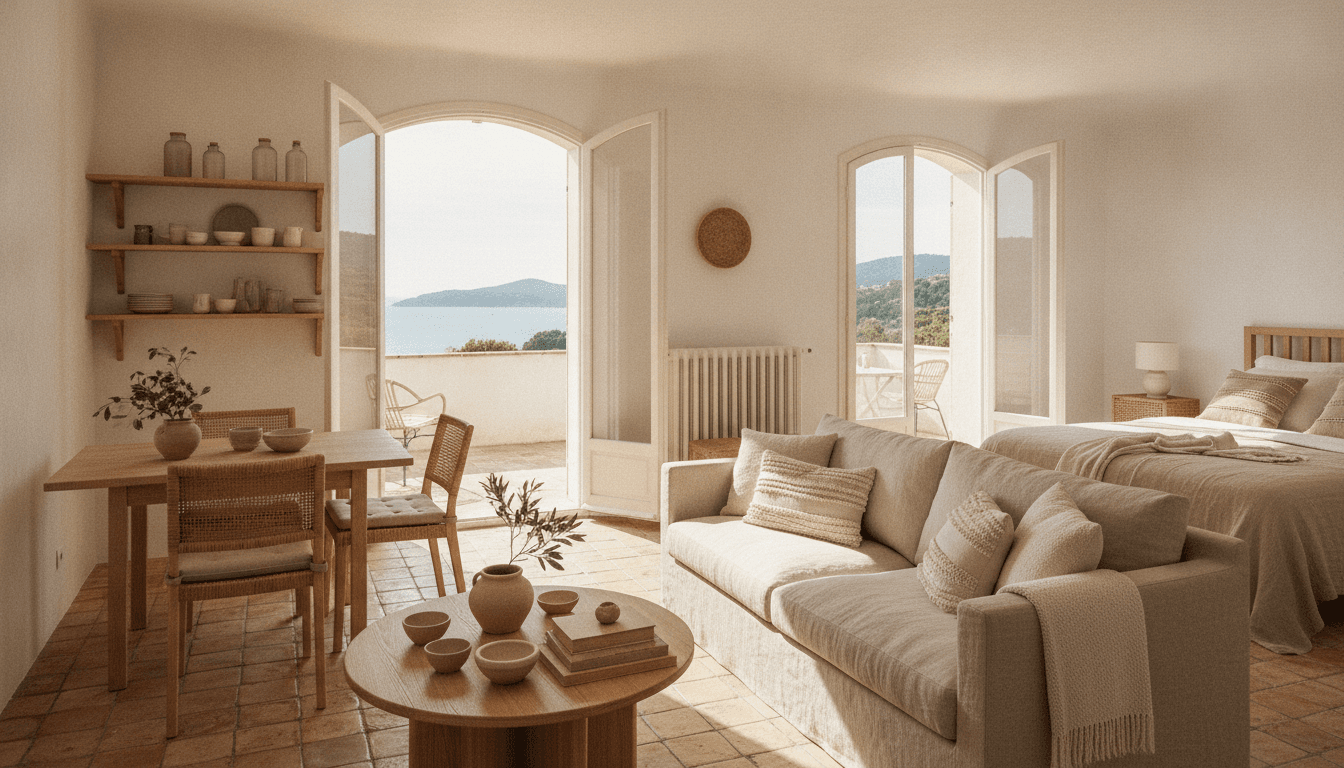
If a rental listing is getting polite interest but weak commitment, the issue is often visual before it is financial. On the French Riviera, tenants and guests compare quickly. They notice light, layout, terrace use, storage, bedding, and whether the property feels easy to live in. Rental home staging is about making those qualities visible, without moving into renovation or building work.
At Marea Studio, this is part of the work I do: home staging, full decoration, and turnkey furnishing for owners, hosts and small investors who need a property to feel clear, practical and well prepared for the rental market.
Rental home staging has a different job from staging for sale
When a property is being sold, the styling often aims to help a buyer picture a future life there. For rental home staging, the priority is more immediate. A tenant or guest needs to understand the space fast and feel that daily life will be simple.
For a long let, that means a layout that makes sense, enough storage, a calm bedroom, and rooms that do not feel overfurnished. For short stays, there is another layer: the property has to read well in photos and suggest a pleasant stay from the first glance.
On the French Riviera, that usually means making the most of natural light, outdoor space, and compact footprints. Many flats in Nice or Menton are not large, but they can still feel generous if the furniture scale is right and the circulation is clear.
What to fix first in rental home staging on the French Riviera
I always start with what weakens the listing visually.
- Too much furniture: a room can be properly equipped and still feel crowded. In a small flat, one oversized sofa or dining table can make the whole plan feel tighter.
- Unclear use of space: if the entrance becomes storage, the dining table doubles as a desk and a drop zone, and the bedroom has no visual order, the property feels harder to rent.
- Poor light management: heavy curtains, dark corners, small lamps in the wrong places, and mirrors that do not help the room borrow light.
- Visual wear: tired linens, mixed accessories, dated bedside tables, empty walls in the wrong places, outdoor chairs that look forgotten. I do not handle renovation or architecture, but a lot can be improved through editing, layout, textiles, and furniture choices.
- Wasted terrace or balcony potential: on this coast, exterior space matters. Even a narrow balcony can support the rental appeal if it is presented as a real place to sit, eat breakfast, or read.
Salt air and humidity matter too. I tend to recommend simple materials, washable textiles, and pieces that do not become high maintenance after one season near the sea.
Rental home staging for short lets and long lets should not look the same
For short-term rentals
The property needs a clear identity, but it also needs to photograph well. That means paying attention to bed styling, bedside lighting, a visible dining setup, and a terrace that looks usable rather than decorative.
Guests on the French Riviera often respond to a sense of ease: shutters open to daylight, pale fabrics, a compact but well planned kitchen, and an outdoor corner that feels intentional.
When I stage a short-let property, I think about the moments a guest is likely to remember and photograph: morning coffee outside, a tidy bed after the beach, a table set for a simple dinner.
For year-round rentals
A long-let property has to leave room for the next occupant's routines. The best approach is usually more restrained. The aim is not to over-style it, but to show that the flat works.
If the owner wants to rent an apartment faster, the strongest moves are often practical ones: correct furniture scale, better room balance, fewer distractions, and a warmer but still neutral palette.
How to improve a rental property without renovation
- Strip back before adding anything
Remove duplicate furniture, personal items, and anything that blocks movement or light. Most rooms improve when they are edited first.
- Give every area one clear purpose
A studio should not feel like one confused room. A bedroom should read as restful. A terrace should look usable, not like storage.
- Use textiles carefully
On the Riviera, fabric choice changes the whole feel of a property. Light curtains, simple bedding, and outdoor textiles that tolerate sun and damp air make a big difference.
- Choose fewer, better key pieces
A good headboard, matching bedside lamps, a rug that fits the room, and outdoor seating that suits the actual footprint usually matter more than extra decoration.
- Prepare the property and the photos together
Owners often think of staging after the listing goes live. In reality, the listing works better when the property has already been edited for the camera and for in-person visits.
This is where Marea Studio fits in very directly. Depending on the property, I may be asked for focused home staging, full decoration for a rental, or turnkey furnishing when an owner wants the flat set up coherently from the start.
Menton, Monaco and Nice: presentation matters, but local rules matter too
If the property is intended for short lets, styling should sit alongside a basic regulatory check.
In Menton, furnished tourist rentals must be declared to the town hall, and there are limits for a primary residence. For a secondary residence, change-of-use rules can apply. In Nice, short-let listings must show a registration number, limits also apply to a primary residence, and the city may ask for an energy performance certificate. More broadly, recent regulation changes in France, including the Loi Le Meur, have made co-ownership rules and energy performance more important for tourist rentals.
I do not provide legal advice, but I do think owners should verify the framework before spending on furnishing or presentation. Good staging supports a rental strategy; it cannot replace one.
For Monaco, situations are often more case-specific depending on the property and how it is managed, so I would still advise checking the practical context early.
Do it yourself, ask an agency, or work with a studio
Some owners can stage a property themselves, especially if they are able to edit hard and avoid sentimental decisions. The usual problem is that they change the easy details and leave the main visual obstacles untouched.
An estate agency may give useful feedback on why viewings are slow or why enquiries are weak. That can be valuable. But the agency is not always there to solve furniture layout, lighting balance, terrace use, or room-by-room presentation.
A studio like Marea Studio, and I am saying this with the obvious bias, works in that exact gap. I look at what should be removed, what should stay, what needs furnishing, and how to make the property read properly for its rental use on the French Riviera. If that is the kind of help you need, the clearest summary of how I work is on the services page.
The honest takeaway is simple: a rental usually becomes easier to present when it asks less of the viewer. Clear rooms, good light, and a believable daily life are often what make the difference.